Tuesday, December 22, 2009

The Early Years Of A Dxer In South Africa - Part 3

This 1960's Siera valve radio produced good mediumwave reception.

MEDIUMWAVE DXING

One evening during 1973 I decided to tune across the mediumwave band on the family Siera valve radio. The sensitivity of the set proved to be quite good on mediumwave and I was pleasantly surprised to hear and identify Radio Botswana (50 kw) on 971 kHz for the first time. The signal was remarkably clear and marked the beginning of a search for other stations operating in the mediumwave band.

Within the next few days I managed to hear and identify Radio Mozambique on 737 kHz (50 kw), Radio Swaziland on 881 khz (10 kw) and Radio Lesotho on 899 kHz (10 kw). Part of the fascination of listening to stations on the mediumwave band was the content of the programming which included local news and announcements - an interesting change from the external service shortwave broadcasting of the day.

DX PUBLICATIONS

A few dx publications helped futher my knowledge while providing inspiration and enthusiasm for the hobby.

HOW TO LISTEN TO THE WORLD (1972)


I purchased a 1972 edition of "How To Listen To The World" from Technical Books for R3.70. Interesting chapters included : "How To Live With A Budget Receiver" by Gordon Nelson & Russel Edmunds and "Intercontinental Mediumwave Listening" By Richard Wood.

WORLD RADIO TV HANDBOOK (1974)


The "World Radio And TV Handbook" remains a valuable source of information for today's dxer. I purchased the 1974 edition of the handbook for R5.80.

This advertisement for the Drake DSR1 receiver appeared on page 45. The receiver included an innovative digital synthesiser display with an accuracy of up to 100 Hz - an awesome facility for a dxer in 1974 ! The advertised price in the 1974 Popular Electronics Communications Yearbook was 2 295 dollars U.S.

THE SADXC


I joined the SADXC in 1974 and received my first copy of the SA DX News. I was astonished to read about the remarkable loggings of experienced and dedicated South African dxers at the time.

The mediumwave loggings especially caught my attention. Various mediumwave radio stations got through from Africa and Europe with good signals. The trans Atlantic reception from the U.S.A. (heard in Cape Town) and trans Indian Ocean reception from Australia (noted in Durban) was intriguing and almost unbelievable to say the least !

Monday, December 21, 2009

1973 Radio Netherlands 6020 kHz QSL


My first QSL card received in 1973 from Radio Netherlands' Madagascar relay on 6020 kHz was quite appropriate and promoted "World DX Friendship Year".

Sunday, December 20, 2009

The Early Years Of A Dxer In South Africa - Part 2

This vintage Pilot 293B radio was manufactureed in the U.S.A. in 1936 and was one of the first radios to include a "magic eye" tuning indicator (Photograph Gary Deacon).

1930's PILOT RADIO

My interest in radio was enhanced as a 12 year old while visiting a friend next door. An interesting looking vintage 1930's Pilot radio (similar to the pic above) used to occupy a corner of their garage. My friend's older brother used to listen to LM radio from Mozambique with the vintage valve receiver.

I recall being quite fascinated with that radio, especially the foreign radio locations displayed in the classic circular glass dial which seemed to indicate what one might expect when tuning in !


A wide choice of interesting radio stations from the Eiffel Tower to Drummondville as indicated in the glass dial display of the Pilot 293B.

DXING FOR THE FIRST TIME

In 1972 at the age of 14, I decided to try and tune in to foreign radio stations with the family transisitor portable receiver. I set up a basic 10 metre longwire outdoor antenna along the side of our house and simply connected this to the receiver's whip antenna. I was pleasantly surprised to hear many foreign radio stations for the first time despite a certain amount of overloading !

DX JUKEBOX


I gained valuable information by listening to Radio Netherlands' excellent programme for shortwave listeners and dxers entitled "DX Jukebox" which used to air on Thursdays. I was also fortunate to receive a few of their free publications including a booklet entitled "Give Your Antenna Some Air" (pictured above).

A few overseas radio publications used to include a monthly shortwave column which I read with great interest. The reported reception of distant stations from exotic locations such as Ghana, Vietnam and Papua New Guinea really fired up my dxing enthusiasm !

RADIO NETHERLANDS QSL CARD


I first heard about QSL verification cards in 1973 when Radio Netherlands issued a special QSL card in order to promote "World DX Friendship Year". I sent off a reception report for one of their relay transmissions from Madagascar and was rewarded with my first verification / QSL card pictured above.

VINTAGE RADIO BLOGSITE


Visit http://www.caperadio.blogspot.com/ for photographs of a few more vintage radios which I've collected from a bygone era.

Thursday, December 17, 2009

The Early Years Of A Dxer In South Africa - Part 1

My earliest recollection of radio began at our home in Pinelands, Cape Town, South Africa. This photograph, taken in October 1958, shows our new home with Devil's Peak and Table Mountain in the background.

As an introduction to a series of chronological posts regarding the dxing experience, I thought that I would share a few early memories of my fascination with radio.

LOCAL RADIO IN SOUTH AFRICA

I was fortunate to grow up during the golden years of radio broadcasting in South Africa (Radio was the main broadcasting entertainment available in South Africa up until 1975 when television was introduced).

I was apparently drawn to the sound of the radio as a toddler. I searched through our family photographs and discovered a 1960 pic of yours truly as a 2 year old in front of an interesting looking 1950's "Global" mediumwave radio :


A subliminal interest in radio probably began with music and announcements from the family mediumwave receiver behind me !

SPRINGBOK RADIO


Springbok Radio was a popular local radio service which operated in South Africa from 1950 until station closedown in 1985.

Like many of my school friends I used to look forward to listening to "No Place To Hide", featuring the adventures of Mark Saxon which was broadcast at 7:15 pm every week night during the 1960's. "Squad Cars" was broadcast at 7:30 pm every Friday night a few years later and used to capture the imagination of the entire family too !


This 1963 photograph suggests that as a 5 year old, I was practising my drumming along with music from the "Siera" family radio. The same modest valve receiver would eventually be used to hear exotic Trans Atlantic dx in the 1970's !

RHODESIA

A family visit to Salisbury, Rhodesia in December 1968 included a memorable tour around the country. Apart from a highlight of being able to watch TV for the first time as a 10 year old, I recall listening to the local radio services which included the RBC (Rhodesia Broadcasting Corporation) and Radio Jacaranda.


This photograph of the family was taken at a rest camp near Victoria Falls. My guess is that the "Normande" portable radio was tuned to the RBC for a news update.

LM RADIO


Lourenco Marques Radio or "LM Radio" broadcast from neighbouring Mozambique. In the late 1950s the station underwent a major format change in order to target the younger generation in South Africa.

An attempt to listen to the "Top Twenty" hits from LM radio as a 12 year old in 1970 marked the beginning of an interest in distant radio reception. Two years later in 1972, I discovered the fascinating world of dxing !

WEBSITES

Two excellent websites worth checking out :

* The internet radio service of Springbok Radio at
http://www.springbokradio.com/ includes a 24/7 rebroadcast of some of the fascinating radio programmes of a bygone era.

* The LM Radio Museum and Sound Archive at
http://www.lmradio.org/ records the history of Radio Clube de Moçambique and Lourenco Marques Radio.

Sunday, December 13, 2009

Sandbaai 1985 - A Sea Gain Dxing Experience !

An appropriate road sign is held up by my dad, standing in front of the Sandbaai dxing cottage in 1985 (Click onto the image for a high resolution).

It would have been my father Arthur Deacon's 85th birthday today. As a tribute to the memory of my dad and his great sense of humour I thought I would introduce this post with a photograph of Arthur holding up an important dxing road sign.

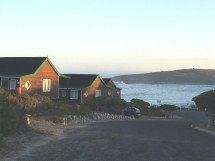
Looking towards the south from the front veranda of the cottage. The bearing of New Zealand lies ahead at the point where the sea "meets" the right hand edge of the house on the left.

Sandbaai (Sandy Bay) is a rustic coastal village, situated 90 kilometres south east of Cape Town. The "champaigne air" town of neighbouring Hermanus is known as the best land based whale watching destination in the world.

A pair of Southern Right whales frolic within 50 metres from the Hermanus coastline.

Situated 100 metres from the coast, the cottage at Sandbaai provided a great dxing opportunity to take advantage of what has become known as the "Sea Gain Effect".

Many interesting distant mediumwave radio stations made it through to this seaside location for the first time during an active period of dxing from 1985 to 1991.

DXING IN 1985

I used to visit my folks at their seaside retirement cottage on a fairly regular basis. I would take along the FRG7 and connect a modest 30 metre longwire antenna to the set via a home-built preselector. The resulting variety of mediumave dx was always a real treat.

ASIA AND THE FAR EAST

Asia and the Far East would fade up just before sunset (March to September). It took me a while to try and identify some of the many stations that used to get through from that part of the world.

AUSTRALIA

It was sensational to hear Australia on mediumwave for the first time. I nearly fell off my chair with disbelief when stumbling onto 1206 kHz one evening. The station turned out to be 6KY Tuart Hill WA which became a benchmark for reception from Australia despite the modest 2 kw output.


SOUTH AMERICA

South America dominated with strong, clear signals across the entire mediumwave band later in the evening and continued right through dawn and past sunrise with the sun quite high up in the sky at times !

CENTRAL AMERICA

Central America made it through around local dawn.

THE CARIBBEAN

The Caribbean got through with surprising levels during the early hours.

THE U.S.A.

The U.S.A. made it through on a few occassions around local dawn.

DX HIGHLIGHTS IN 1985 :

FREQ (kHz)

535 GRENADA Radio Grenada (10 kw)

560 GUYANA GBC Georgetown (10 kw)

610 TRINIDAD NBS Port of Spain (50 kw)

750 NICARAGUA Radio Sandino Managua (50 kw)

790 BARBADOS VoB St. George (20 kw)

790 PANAMA Southern Command Network Fort Clayton (10 kw)

825 ST. KITTS Radio Paridise Basseterre (50 kw)

830 BELIZE Radio Belize (20 kw)

1060 DOMINICA ZGBC Roseau (10 kw)

1206 AUSTRALIA 6KY Tuart Hill WA (2 kw)

1206 PHILPPINES DWWA Quezon City (10 kw)

1242 PHILPPINES DWBL Manila (20 kw)

1425 EQUADOR Radio Portena Guayaquil (500 watts)

1485 ASCENSION ISLAND BBC Relay English Bay (500 watts)

1540 BAHAMAS ZNS1 Nassau (20 kw)

1548 ST. HELENA Radio St. Helena Jamestown (500 watts)

1548 TAIWAN International Community Radio Taipei (10 kw)

1555 CAYMAN ISLANDS Radio Cayman (10 kw)

1600 EQUADOR Radio Union Quito (5 kw)

1602 ASCENSION ISLAND Volcano Radio (1 kw)

Receiver : FRG7 and preselector

Antenna : 30 metre longwire

Tuesday, December 8, 2009

St.Helena Radio St.Helena 1548 kHz QSL & Audio


The QSL letter received in 1985 from Station Manager Tony Leo was detailed and informative. Click onto the image for a high resolution.

Jamestown, St. Helena (Photograph Lin Thorsen).

Another memorable highlight from the South Atlantic was the reception of Radio St. Helena on 1548 kHz. The station was heard at the coastal resort of Sandbaai on the 15th May 1985. The 500 watt signal made it through over a distance of 3 220 km / 2 000 miles via the FRG7 and modest 30 metre longwire antenna.

Station manager Tony Leo kindly verified my reception report with a friendly and detailed QSL letter. Tony was impressed with the accuracy of my report and included a two page copy of the local news items which he announced over the air ! He added a generous comment at the end of the letter :

" ... We have received several reception reports in the past. However, may I say that your report really outshines any other report we've received ... "

A reflection of being fortunate to listen from a great, quiet coastal location with the benefit of the "sea gain" effect and the superb reception conditions experienced at the time !

Another view of Jamestown showing Jacobs Ladder - a steep climb of 699 steps ! (Photograph Lin Thorsen).

A copy of the actual page from which local news items were announced over the air on Radio St. Helena on Wednesday 15th May 1985. Click onto the image for a high resolution.

Page two of the local news items announced over the air on Radio St. Helena. You'll hear the actual announcement at the beginning of the second Radio St. Helena audio clip on the right hand side of the web page ! Click onto the image for a high resolution.

AUDIO CLIPS (On the right hand side of the web page)

AUDIO CLIP ONE


Station sign-on with a trumpet callsign and part of "Life On The Ocean Wave" followed by the BBC news signature tune. Recorded at 1959 hrs UTC on the 7th June 1985.

AUDIO CLIP TWO

Local news items read by Tony Leo, followed by "Radio Bingo" and "Evening Shuttle". Recorded at 2015 hrs UTC on the 15th May 1985.

Both edited recordings were made during reception at Sandbaai via the FRG7 and 30 metre longwire antenna.

SANDBAAI

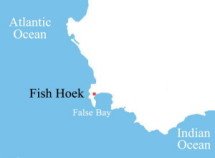
Google Earth Image showing the location of Sandbaai (78 km south east of Fish Hoek) and the arrival bearing from Radio St. Helena.

Looking south from the dx location at Sandbaai, situated approximately 100 metres from the coast. Apart from Radio St. Helena, many other distant mediumwave stations were received here for the first time during the 1980's.

Tuesday, December 1, 2009

Ascension Is BBC Radio Ascension 1485 kHz QSL

This appropriate stamp was attached to the QSL letter inside the envelope. The verification in 1992 coinsided with the 25th Anniversary of the Atlantic Relay Station on Ascension.

The QSL letter was signed by BBC Transmitter Engineer Andrew Marsden who included a diagram of the transmitter and antenna. Click onto the image for a high resolution.

Radio Ascension made it through to Fish Hoek on the 15th September 1991. The radio station used to transmit the BBC World Service 24/7 on 1485 kHz with 500 watts.

BBC Transmitter Engineer Andrew Marsden kindly verified my report and added :

" ... Congratulations on your reception of Radio Ascension on 1485 kHz mediumwave. Radio Ascension transmits BBC World Service 24 hrs a day and is intended to cover Ascension only. The carrier power is 500 watts and is produced by two HCD Research solid state 250 watt transmitters operating in parallel. The aerial was assembled from scrap and so is a little unconventional. The island MF and VHF services are provided for the local population but have very little or no official BBC support ... "

Ascension Is BBC Radio Ascension 1485 kHz Silent

Patsy Moyce from AIG Enquiries confirmed via an email received on the 4th November that Radio Ascension is no longer broadcasting on 1485 kHz.

Monday, November 23, 2009

Ascension Is ZD8VR Volcano Radio 1602 kHz QSL


The QSL card and friendly letter received from Kent Goddard, Assistant Station Manager of ZD8VR, Volcano Radio, Ascension Island in 1979 (Click onto the images for a high resolution).

In connection with the previous post regarding Volcano Radio, Ascension, I thought I'd share an interesting QSL card and verification letter including a historical audio clip from 1979 !

ZD8VR Volcano Radio made it through to my QTH in Pinelands on the 5th May '79 via a modest 1960's Siera domestic valve receiver and 20 metre longwire antenna. It was a surprise to receive the 500 watt station with a remarkable peak from across the South Atlantic, over 4 430 km / 2 754 miles away !

Siera domestic valve receiver.

A photograph of the Pinelands DX shack taken in 1980 included a Teac cassette tape deck, Realistic DX150A and Siera domestic valve receiver.

AUDIO CLIP (available on the right hand side of the web page).

A jazz music programme, "Gist Of Jazz" was presented by DJ Ed Hurley and featured the "Bob James 4" album. After the "live" sign-off announcement at the end of the programme, one can hear the ambient sounds in the studio and the "winding up" of a reel-to-reel pre-recorded tape of the station id and National Anthem.

A BRIEF HISTORY

Operation began on the 3rd September 1944 with the call letters WXLR and continued until sometime after WWII.

The radio station resumed broadcasting in 1958 with an ouput of 3 watts. The transmitter was upgraded to 30 watts during the early 1960's. Volcano Radio eventually operated 24/7 with 1 kw (reduced to 500 watts during the time I heard the station).

AFRTS funded Volcano Radio until 1982 when budget cutbacks ended that support which was then supplied by the employee funded Volcano Club.

A RESPONSE FROM SA DXER VINCE STEVENS

" Great memories Gary.

I wish I still had my old cassette tapes because one of them had a beautifully clear 'Volcano Radio' sung ID at 22h00 on it. I remember they were playing C&W and I even remember one of the artists being Mickey Gilley. This goes back to the mid 80's probably..I struggled to get an ID outta VR but that night I just left the tape running and there it was when I played it back in the morning..clear peak at TOH..

Funny how this sticks in my mind from over 20 years ago.. guess it was because I was always intrigued by Volcano Radio - the station name, the exotic location, the low power txer.. to me it encapsulated the appeal of Dxing. "


Any memories or futher information regarding ZD8VR Volcano Radio would be greatly appreciated. You are welcome to add your comments below.

Sunday, November 22, 2009

Volcano Radio 1638 kHz (ex 1602 kHz) Silent


On Thursday (20th November) I received direct confirmation from Penny Peters of the VT Group on Ascension Island in connection with Volcano Radio which has since moved from 1602 kHz to 1638 kHz.

1638 kHz is silent at present due to changes in contractual work and antenna usage according to information received on the 29th November from Russel Yon c/o the U.S. Base on Ascension. There is also uncertainty regarding future MW operation.

Volcano radio still broadcasts on 98.7 MHz FM.

Sunday, November 8, 2009

Ultralight Reception of 710 WOR New York NY


710 WOR New York made a surprise appearance at Fish Hoek over a distance of 12 550 km on the barefoot Sony M37V during the early hours this morning.

Although the signal was indistinct most of the time, there were two brief occasions when I managed to resolve the audio :

2233 hours UTC with part of an ad for "Mercedes Bentz" just prior to the talkback programme ;

2311 hours UTC with a message for callers to phone 1-800 424 13 27 for "New Vitality MultiVescence" during a health chat show.

Wednesday, November 4, 2009

6KG Kalgoorlie WA 981 kHz QSL


The 2 kw signal from 6KG Kalgoorlie on 981 kHz is one of the most consistent of the Radio West stations to get through to Fish Hoek, despite the inland tx location 595 kilometres east-northeast of Perth.

6KG was heard with a surprising peak at 1656 hours UTC during good reception conditions on the 13th May this year. * Audio Clip on the right hand side of the web page.

Program director Mat Cummins kindly verified the audio clip of the reception and added :

" ... The Kalgoorlie site is unusual in that it’s not really near water (as some AM sites with good reception tend to be) and it does suffer some lightning strikes from time to time. Kalgoorlie has had a proud tradition of broadcasting in the Goldfields and was one of the first stations on air in W.A. The studios have been in the same location since the station started ! "

Thank you once again Mat for verifying another Radio West station. The interesting information regarding your radio stations is also greatly appreciated !

Gold town Kalgoorlie once had 90 hotels !

Monday, November 2, 2009

6BY Bridgetown WA 900 kHz QSL


The 2 kw signal from 6BY Bridgetown on 900 khz made it through to Fish Hoek on a few occasions this year via the M37V and 220 metre BOG.

Program director Mat Cummins kindly verified a follow up report and audio clip from previous reception on the 6th August 2006 and added :

" ... Wow these are like mini time capsules aren’t they? It’s a shame but so much radio that we make, we don’t keep copies of, so hearing this brings back a sense of nostalgia about what was on air at the time on the radio stations ... "

Wednesday, September 23, 2009

FIRS Stanley Falkland Islands 530 kHz QSL


The Falkland Island Radio Service broadcasting on 530 kHz has been a sought-after dx target in South Africa for many years. The highlight of the recent dxpedition to Jongensgat was the reception of FIRS on 530 kHz - the first time that the Falkland Islands has been received on mediumwave in South Africa.

Station Manager Corina Goss kindly verified my reception report from 25 August with an attactive QSL card, stickers and programme schedule. Thank you Corina for the QSL card which will certainly provide a good reminder of the surprising reception !


Monday, September 21, 2009

6MD Merriden WA 1098 kHz QSL


6MD Merriden on 1098 khz made it through to Fish Hoek on quite a few occasions this year via the M37V and 220 metre BOG.

Program director Mat Cummins kindly verified a follow up report from previous reception on the 22nd March 2006 and added :

" ... I know I said last week that receiving our Collie frequency (1134) was pretty amazing but considering that Merredin is inland from Perth by at least 300km this is even more staggering ! ... Fantastic work ! "

Thanks Mat for the verification, including your generous comments !

Thursday, September 17, 2009

6TZ Collie WA 1134 kHz QSL


The 2 kw signal from 6TZ Collie WA made it through to Fish Hoek on 1134 kHz via the M37V and 220 metre BOG during good propagation conditions experienced on the 16th April this year.

Radio West Program Director Mat Cummins kindly verified my reception report this week and added :

" ... The 1134 signal actually comes from Collie which is inland some way (perhaps 60km’s) and not one of the easiest signals to get either here in W.A. or of course in South Africa so what you’ve achieved is pretty rare I would suggest. We recently did some more work to that transmitter to improve reception in the area so perhaps that has also contributed to the result too ! "

Thursday, September 3, 2009

Jongensgat Dxpedition - 24th to 27th August 2009


Another enjoyable dxpedition to Jongensgat with fellow dxers Vince Stevens and John Plimmer (with John's wife Dawn and friend Willie) produced some interesting dx.

After arriving safely in Vince's 4x4 on Monday afternoon (24th August), I set up and directed the 220 metre BOG towards Argentina / over the shoulder towards Japan.

CONDITIONS

Strong signals from Japan and the Philippines were noted during the evenings. Argentina dominated across the band during the early hours with many stations still present from that part of the world after 0700 UTC with the sun well up in the sky !

FALKLAND ISLAND RADIO SERVICE

The highlight of the dxpedition was the reception of Falkland Island Radio Service on 530 kHz. So far as I am aware, this is the first time that The Falkland Islands has been received on mediumwave in South Africa.

The report is available as a pdf file at http://www.box.net/shared/iepg98urif

Monday, August 17, 2009

Ultralight Radio Awards Received From The U.S.A.


Today I was fortunate to receive ultralight award certificates from John Bryant on behalf of the other ultralight awards commitee members Robert Ross and Gary DeBock.

The above award is for the recent reception of one hundred Australian mediumwave stations from across the Indian Ocean utilizing an ultralight radio receiver of the unlimited class.

The above "Master Dxer" award is for the first 50 MW stations received from across the Indian Ocean utilizing an ultralight radio receiver of the unlimited class.

The above award is for the reception of my first radio station from across the Indian Ocean (Family Radio, Taiwan on 1503 kHz) utilizing an ultralight radio receiver of the barefoot class.

My humble thanks and appreciation for the acknowledgement guys !

Visit http://www.dxer.ca/ for an excellent insight into the fascinating hobby of Ultralight Radio Dxing

Visit
http://groups.yahoo.com/group/ultralightdx/ which is an interesting discussion area regarding ULR Dxing.

Wednesday, August 12, 2009

3RN Melbourne VIC 621 kHz QSL


3RN Melbourne, VIC was heard and identified for the first time on 621 kHz, a frequency usually dominated by co-channel Radio Botswana. The station was received in Fish Hoek on the 27th May with the SRF-M37V and 220 m BOG.

Graham from the ABC kindly verified my reception report and attached a coverage map.

Google Earth Image of the 3RN transmitter site situated in the north-western suburbs of Melbourne at 37 43 19S / 144 46 58E. 3RN broadcasts with a power of 50kW on a 215m mast (one of the few remaining giant masts in Australia).

Monday, August 10, 2009

Fish Hoek Dx Report - 6 April to 27 May 2009

Google Satellite Image of Fish Hoek, looking across False Bay towards Australia.

The second quarter of 2009 proved to be an excellent season for MW reception from Australia.

I was fortunate to hear 104 stations from down under (including 13 South African firsts) with the Sony SRF-M37V Ultralight and 220 metre BOG (The M37V has turned out to be an impressive performer in the Cape Peninsula / South African environment with few local stations to contend with).

Highlights included the reception and first time positive identification of 5LN Port Lincoln on 1485 kHz (200 watts) over a distance of 6 200 miles / 9 979 km and 5LC Leigh Creek (200 watts) over 6 502 miles / 10 465 km.

Perhaps the most remarkable reception of the season occurred when 2RN Wilcannia (100 watts) or 4HU Hughenden (50 watts) also made it through on 1485 kHz while 2WA Wilcannia (100 watts) or 5WM Woomera (50 watts) occupied 1584 khz.

The report (including pics and QSL highlights) is avaliable as a pdf file at
http://www.box.net/shared/ouo1y8exzj

Wednesday, August 5, 2009

Vision Radio Bunbury WA 1017 kHz QSL


The 1 kw signal from Vision Radio Network made it through to Fish Hoek on 1017 khz via the M37V and 220 metre BOG during the good propagation conditions experienced on the 13th May this year.

Network and Admin Assistant Anne Nicholson kindly verified my e-report this morning and added :

" I can confirm that you did if fact receive our relay signal from 1017 AM in Bunbury, Western Australia. At more than 8 500 km from Fish Hoek I would say that this was a pretty good effort ! "

Thank you Anne for the reply which represents the third verified station from the Christian radio network to get through to Fish Hoek, the other two being Kalgoorlie on 1431kHz (2 kw) and Margaret River on 1611 kHz (400 watts).

5PB Adelaide SA 972 kHz QSL


5PB transmits on 972 kHz with a power of 2kW and is located in the northern suburbs of Adelaide.

It was a pleasant surprise to hear and identify 5PB for the first time at Fish Hoek on the 12th May this year. The reception occurred via the M37V and 220 metre BOG.


I have often heard BBC programming on 972 kHz during the usual propagation peaks from Australia, typically between 1600 UTC and 1900 UTC. On the 12th May, the signal was still present at 2030 UTC with a clear "News Radio" id during local programming from Sydney.

Graham from the ABC kindly verified the reception and added :

" This is a difficult transmitter site with a history of problems, and hard enough to hear from parts of Adelaide, so a very good catch from your part of the globe ! "

Wednesday, July 29, 2009

5MV Renmark SA 1062 kHz QSL

Renmark is situated on the banks of the River Murray.

5MV Renmark was heard during the remarkable reception conditions experienced on the 18th May this year. The 2 kw signal made it through to Fish Hoek via the M37V Ultralight and 220 metre BOG.

During DU reception, 1062 kHz is usually occupied by 4TI Thursday Island which in itself is an interesting catch being the most distant Australian MW station from Fish Hoek (over 12 282 km away).

5MV made it through with some strong peaks on this occasion however and a lucky propagation break at 1805 UTC included a clear weather report for South Australia and a local "ABC South Australia and Broken Hill" id.

Graham from the ABC kindly verified my reception report and included a transmitter coverage map.

Saturday, July 18, 2009

Cape Agulhas Dxpedition - 11th July 2009

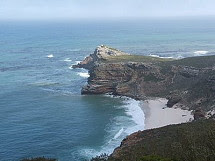
Built in 1848, the Cape Agulhas lighthouse is the second oldest working lighthouse in South Africa.

Cape Agulhas (34° 49' 58" S, 20° 0' 12" E) is the most southern tip of the African Continent and is also the official dividing point between the Indian Ocean and the Atlantic. Early Portuguese seafarers, rounding this dangerous point called it L'Agulhas which means Cape of Needles (referring to the jagged rocks of the coastline or the fact that a compass shows no real deviation between true north and magnetic north at this location).

The southern-most tip of Africa is also the official dividing point between the Indian Ocean and the Atlantic.


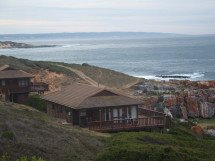
L'Agulhas / Cape Agulhas has been on my list of proposed dxing destinations for some time so we took advantage of an opportunity to visit the area during a recent family holiday. We booked into the Cape Agulhas Backpackers, situated in neighbouring Struisbaai.

Later that evening I checked the AM reception with the barefoot Sony SRF-M37V. 720 Perth and 1503 Taiwan were already in at 1545 UTC so it was with great anticipation that I set off for the short drive to Cape Agulhas.

The dx location situated west of the Cape Agulhas lighthouse.

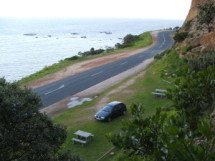
Dxing from the car, just past the Cape Agulhas lighthouse (with the beam sweeping overhead) at about 350 metres from the southern most point of Africa, was a memorable experience with good reception from Asia and the Far East.

I used the M37V and 220 metre BOG aimed at 90 degrees towards Indonesia - the most convenient direction in line with the gravel road along the coastline in front of the lighthouse.

Google Earth Image showing the DX location.

Highlights included 801 KTWG Agana Guam (10 kw over 13 998 km) and 1332 JOSF Nagoya Japan (50 kw over 14 341 km).

Loggings during the evening of the 11th July included :


549 1635 VIETNAM VoV2 My Van (personal first)

594 1625 PHILIPPINES DZBB Quezon City w talkback

711 1632 VIETNAM VoV 1 Thoi Long

720 1733 INDIA AIR Chennai w EE news

801 1733 INDIA AIR Japalpur w EE news

801 1720 GUAM KTWG Agana w id

927 1732 INDIA AIR Vishakapatnam w EE news

936 1732 INDIA AIR Tiruchirapalli w EE news

1044 1732 INDIA AIR Mumbai w EE news

1053 1758 JAPAN JOAR Nagoya

1080 1743 CHINA CRI in EE

1098 1904 CHINA RTI / RFA Hukou Village

1143 1858 TAIWAN Taiwan Area Fishery Broadcasting Station, Penghu

1242 1646 VIETNAM VoV External Service in EE

1242 1903 JAPAN JOLF Tokyo

1251 1818 UNIDENTIFIED w talkback - huge signal

1269 1700 CHINA Voice of Russia in EE

1278 1900 JAPAN JOFR Fukuoka w RKB id - good peak

1287 1657 INDONESIA RRI Palembang - huge signal

1332 1840 JAPAN JOSF Nagoya (personal first)

1413 1906 JAPAN JOIF Fukuoka - good peak

1476 1825 PHILIPPINES DXRJ Illigan City w "DXRJ 14-76" id

1521 1652 TAIWAN CBS / RTI Changchin - huge signal

1530 1707 CHINA Zhejiang RGD Hangzhou

I returned to the Struisbaai cottage and listened briefly from 2200 hrs to 2230 hrs UTC. Trans Atlantic reception on the barefoot Sony SRF-M37V included Argentina on 710, 910, 1110, 1130, and 1270 kHz.

A panoramic view from the lighthouse. The dx location along the coastal road and most southern point of the African continent can be seen towards the right (Click onto pic for a higher resolution).

Wednesday, July 15, 2009

Widerness Dxpedition - 4th July 2009

The Wilderness, Western Cape, South Africa.

Situated 15 km east of George on the Cape Garden Route, the scenic area of the Wilderness overlooks the Indian Ocean and consists of golden beaches, lakes, a placid lagoon, indigenous forest and over 230 bird species.

The mild climate and low winter rainfall makes this area a popular local and international holiday destination.


The Outeniqua Choo Tjoe crossing the Kaaimans River into the Wilderness.

The picturesque forest walk alongside the Touw River.

A recent holiday with the family to the Wilderness included some interesting AM dxing.

I have often experienced remarkable results from various locations with elevated positions along the South African coast ( ie Millers Point, Jongensgat and Cintsa). After searching for an elevated position, I found an interesting receiving location situated approximately 50 metres above and 50 metres from the Indian Ocean.


The Wilderness dx location overlooking the coast.

After parking the car in the small public car park above, I descended the 122 steps to the beach while rolling out the 220 metre receiving antenna which was directed along the coastline towards Australia - a sloper for the first 50 metres which became a BOG for the remaining 170 metres. I returned to the car and dxed with the Sony SRF-M37V ultralight.

On the beach while my advisors calculate the direction to Australia !

Highlights from Australia included 1476 4ZR Roma (2 kw), 1530 2VM Moree (2 kw) and 1602 5LC Leigh Creek SA (200 watts).

Loggings during the evening of the 4th July included :


1125 1740 AUSTRALIA 5MU Murray Bridge (5 kw)

1143 1820 AUSTRALIA 4HI Emerald (presumed) (5 kw)

1242 1740 AUSTRALIA 5AU Port Augusta (2 kw)

1305 1740 AUSTRALIA 5RN Renmark (2 kw)

1314 1615 PHILLIPPINES DWXI Paranaque w religious sermon (10 kw)

1323 1725 AUSTRALIA 5DN Adelaide w id as "Adelaide's Cruise 13 - 23" (2 kw)

1395 1650 AUSTRALIA 5AA Adelaide with id "13-95 5 double A" (5 kw)

1467 1704 AUSTRALIA 3ML Mildura with id "Easy Mix 14-67" and pops (2 kw)

1476 1705 AUSTRALIA 4ZR Roma with id as "Zinc ZR" (2kw)

1512 1634 AUSTRALIA 6BAY Morawa with pops - a huge clear signal (5kw)

1530 1722 AUSTRALIA 2VM Moree with time check for "22 after 3" (2 kw)

1530 1640 CHINA Zhejiang RGD Hangyang (presumed) in CC (50 kw)

1575 1716 MAURITIUS BBC Relay Bigara (2 kw)

1602 1602 AUSTRALIA 5LC Leigh Creek with 'Overnights' (200 watts)

1611 1715 AUSTRALIA Vision Radio Margaret River with religious programme (400 watts)

1620 1632 AUSTRALIA UNIDENTIFIED with "Everlasting Love" (400 watts)

Could this be an official sign for barefoot dxing ?

6WF Perth on 720 kHz was received barefoot (via the internal ferrite antenna) at the elevated holiday cottage, situated approximately 500 metres from the coast. The reception occurred on the 6th July at 2130 UTC with a clear "7-20 ABC Perth" id followed by ABC news.

The Knysna Lourie, photographed opposite the holiday cottage.

Rowing up the Touw River - a memorable and tranquil experience.

After an enjoyable stay in this picturesque part of the world, we proceeded to the impressive Garden Route Game Lodge before moving on to Cape Agulhas which included an intersting dx session at the most southern tip of the African continent. More about that in my next post.

The cheetah, the most illusive of the big five, photographed during our stay at the Garden Route Game Lodge.